Materials
Difference Between Quartz vs Granite: Which Is Better for Worktops and Projects?
Compare quartz vs granite for worktops and projects. Explore durability, cost, maintenance, design options, and tips for choosing a reliable supplier.
Surfular Editorial Team · Updated · 8 min read
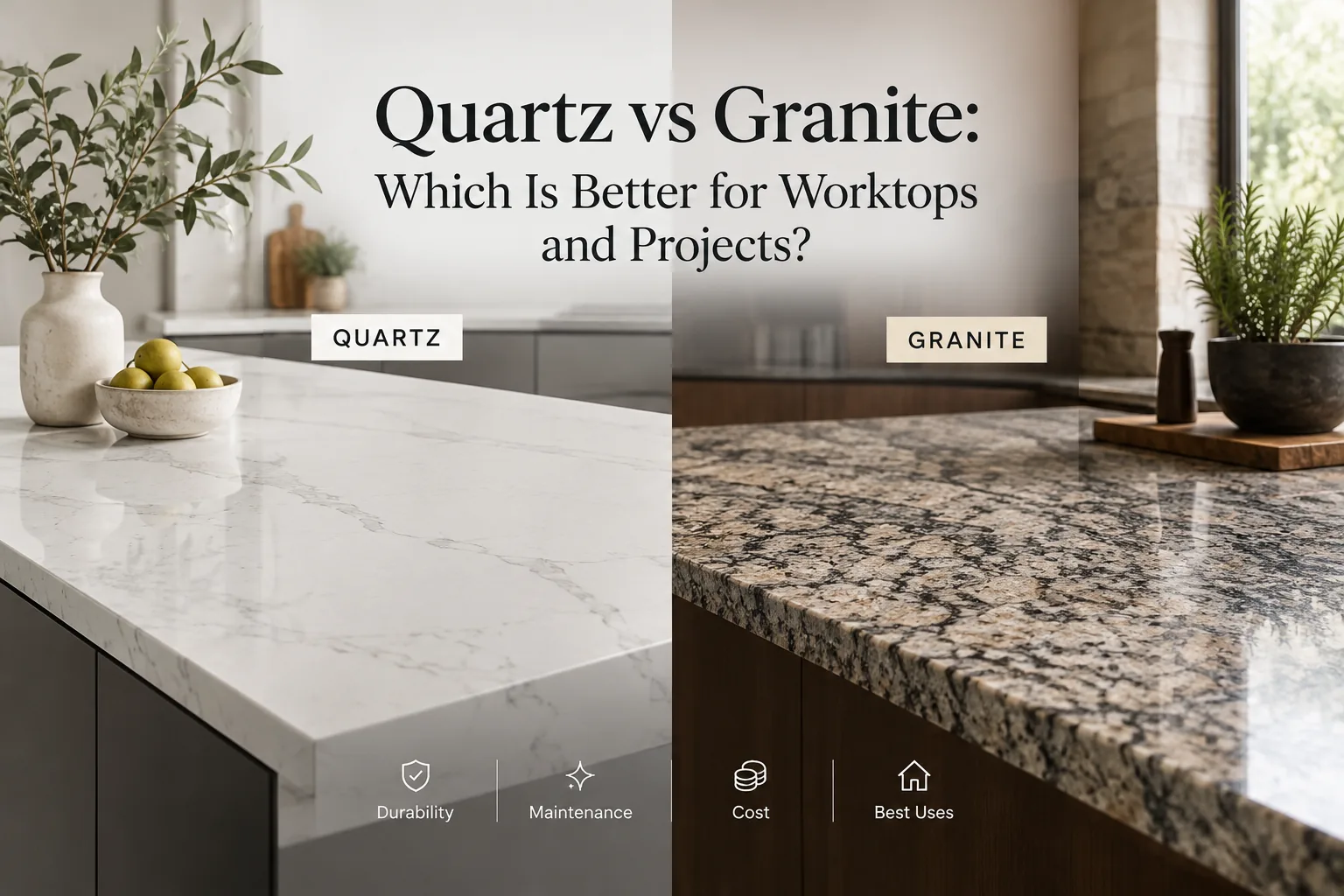
Choosing the right stone surface is an important decision for homeowners, architects, interior designers, and construction professionals. Among the most popular options, quartz and granite stand out for their durability, attractive appearance, and versatility. However, both materials have different characteristics that affect their performance, maintenance, cost, and suitability for various applications.
Understanding the difference between quartz and granite can help you select the ideal surface for kitchen worktops, bathroom vanities, countertops, flooring, and large-scale commercial projects. Whether you are purchasing materials for a residential renovation or sourcing slabs for a construction project, knowing the advantages of each material will help you make an informed decision.
In this guide, we compare quartz vs granite, covering their composition, durability, appearance, maintenance, and cost to help you determine which material is better for your requirements.
What Is Quartz?
Quartz worktops are typically manufactured using natural quartz crystals combined with polymer resins, pigments, and other materials. These engineered surfaces are designed to provide a consistent appearance, excellent durability, and a wide variety of colours and patterns.
Unlike natural stone, engineered quartz is manufactured under controlled conditions. This allows manufacturers to produce slabs that replicate the appearance of marble, concrete, and other natural materials while offering a more uniform finish.
Working with a reliable quartz manufacturer helps buyers access different colours, thicknesses, finishes, and slab designs suitable for modern residential and commercial interiors.
Advantages of Quartz
- Consistent appearance: Engineered quartz offers uniform colours and repeatable patterns across multiple slabs.
- Low maintenance: Most engineered quartz surfaces do not require routine sealing.
- Non-porous surface: Properly manufactured quartz resists everyday staining when cleaned promptly.
- Design flexibility: Available in contemporary colours, marble-inspired patterns, and different finishes.
- Versatile applications: Suitable for kitchen countertops, bathroom vanities, reception desks, and selected commercial interiors.
However, quartz has certain limitations. Standard engineered quartz is not completely heat-proof, and direct contact with hot cookware can damage the resin. It is also generally unsuitable for prolonged outdoor exposure unless the specific product is designed for those conditions.
What Is Granite?
Granite is a natural igneous rock formed through the slow cooling of molten material beneath the Earth’s surface. It contains minerals such as quartz, feldspar, and mica, which contribute to its distinctive colours, patterns, and textures.
Each granite slab is naturally unique, making it a popular choice for projects that require authentic stone characteristics. Its strength and resistance to everyday wear make it suitable for many residential and commercial applications.
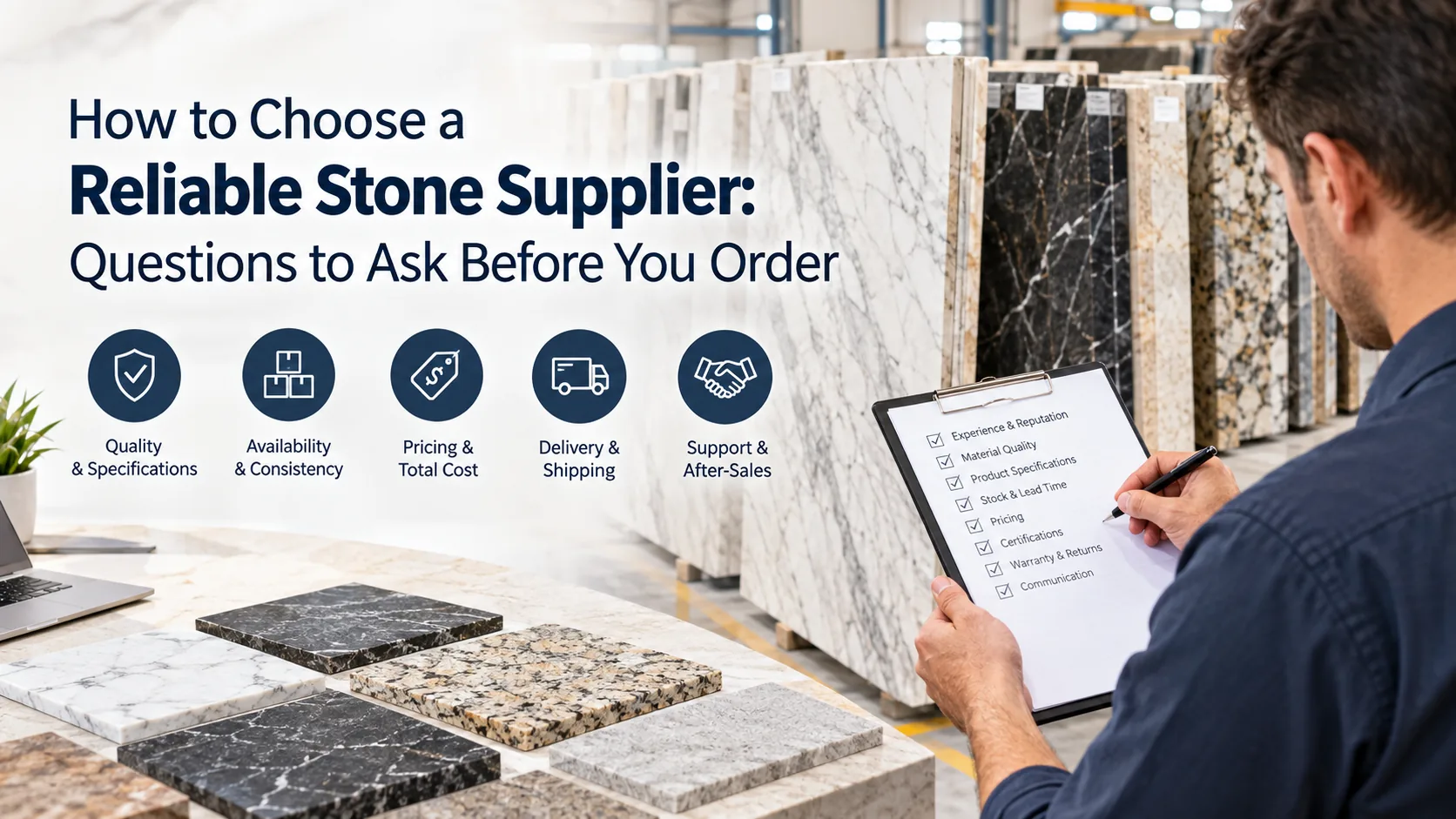
A dependable granite supplier can help buyers select slabs based on colour, grain pattern, thickness, finish, and intended use. For architects and contractors, inspecting the actual slab is particularly valuable because natural variations can occur between pieces of the same stone.
Advantages of Granite
- Natural beauty: Every slab features distinctive mineral patterns and colour variations.
- Heat resistance: Granite generally tolerates heat better than resin-based engineered quartz, although thermal shock and sudden temperature changes can still cause damage.
- Durability: Properly selected and installed granite can withstand years of everyday use.
- Scratch resistance: Many granite varieties offer excellent resistance to ordinary scratches.
- Design versatility: Available in a broad range of colours, patterns, and finishes.
Granite does require some additional consideration. Depending on its porosity, the stone may need periodic sealing to reduce staining. Natural variations can also make colour matching across multiple slabs more challenging.
Quartz vs Granite: Key Differences
Although quartz and granite are both popular worktop materials, their composition and performance differ in several important ways.
| Feature | Quartz | Granite |
|---|---|---|
| Material type | Engineered stone | Natural stone |
| Appearance | Generally consistent patterns | Unique natural patterns |
| Porosity | Usually non-porous | Varies by stone |
| Sealing | Usually not required | May be required |
| Heat resistance | Moderate; protect from hot cookware | Generally higher |
| Scratch resistance | Very good | Very good, depending on the variety |
| Stain resistance | Generally excellent | Depends on porosity and sealing |
| Outdoor suitability | Product-dependent; UV exposure may cause discolouration | Often suitable, depending on the variety and climate |
| Maintenance | Relatively low | Low to moderate |
| Cost | Varies by brand, quality, and design | Varies by variety, rarity, and origin |
Actual performance depends on the specific product, fabrication quality, installation, and maintenance practices.
1. Durability and Strength
Durability is a major consideration when selecting materials for kitchen worktops and commercial projects.
Engineered quartz is designed to provide a hard, durable surface that performs well in everyday indoor environments. Its consistent composition makes it a practical option for kitchens, bathrooms, and workspaces where predictable appearance and easy maintenance are priorities.
Granite is also highly durable and performs well in demanding environments. However, its properties vary between varieties, and some slabs may be more susceptible to chipping, cracking, or staining than others.
For busy kitchens, both materials can be excellent choices when properly fabricated and installed. Quartz is often preferred for its consistency, while granite appeals to buyers who value natural stone and greater tolerance of brief heat exposure.
2. Appearance and Design Options
Appearance can significantly influence the choice between quartz and granite, particularly in premium residential interiors and hospitality projects.
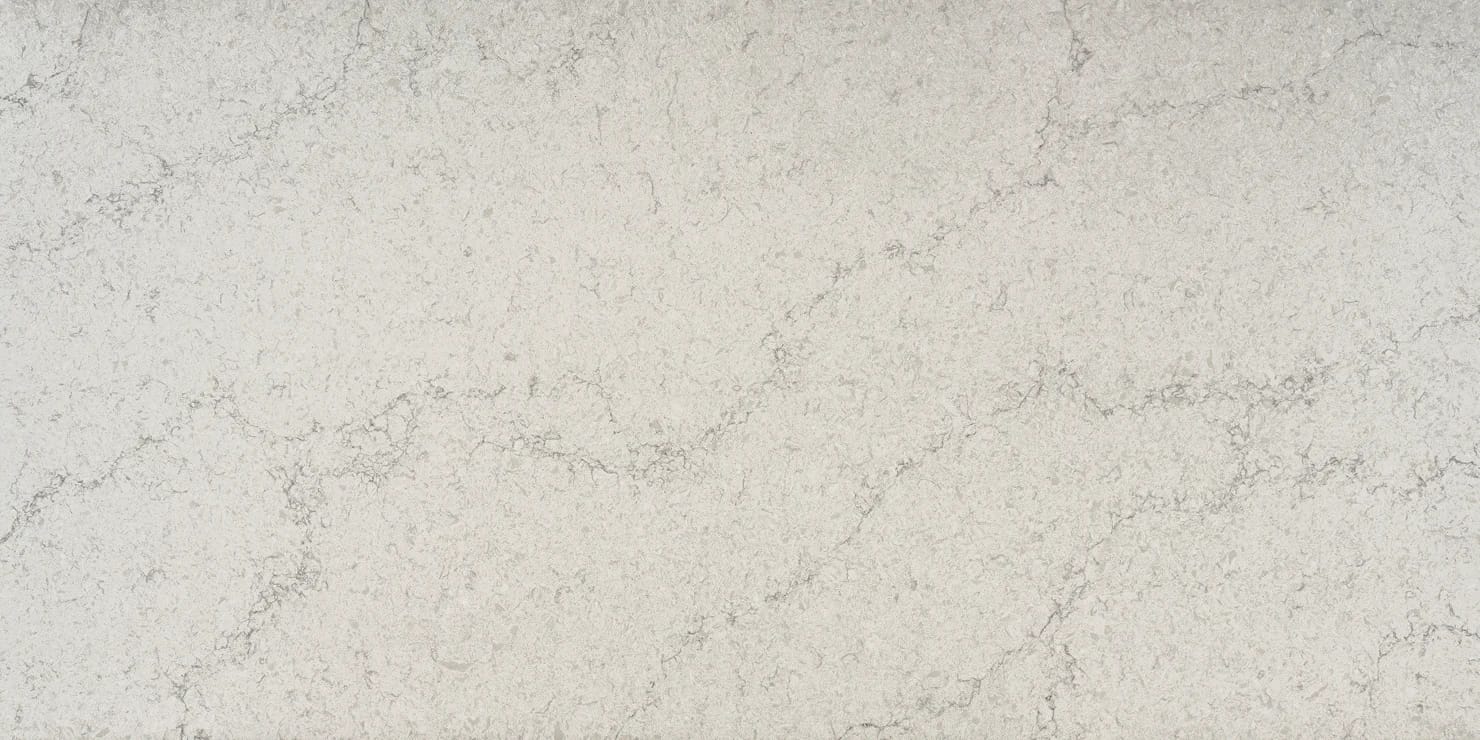
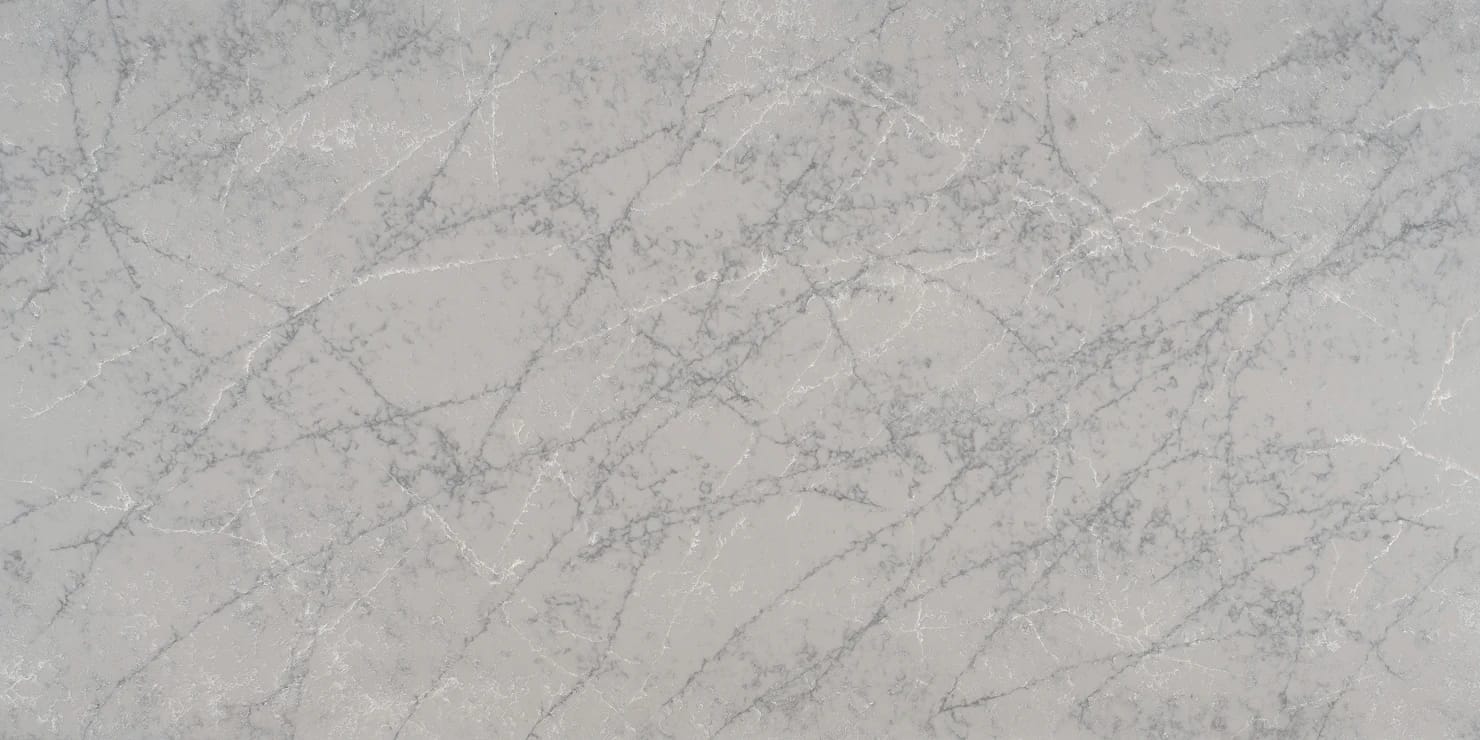
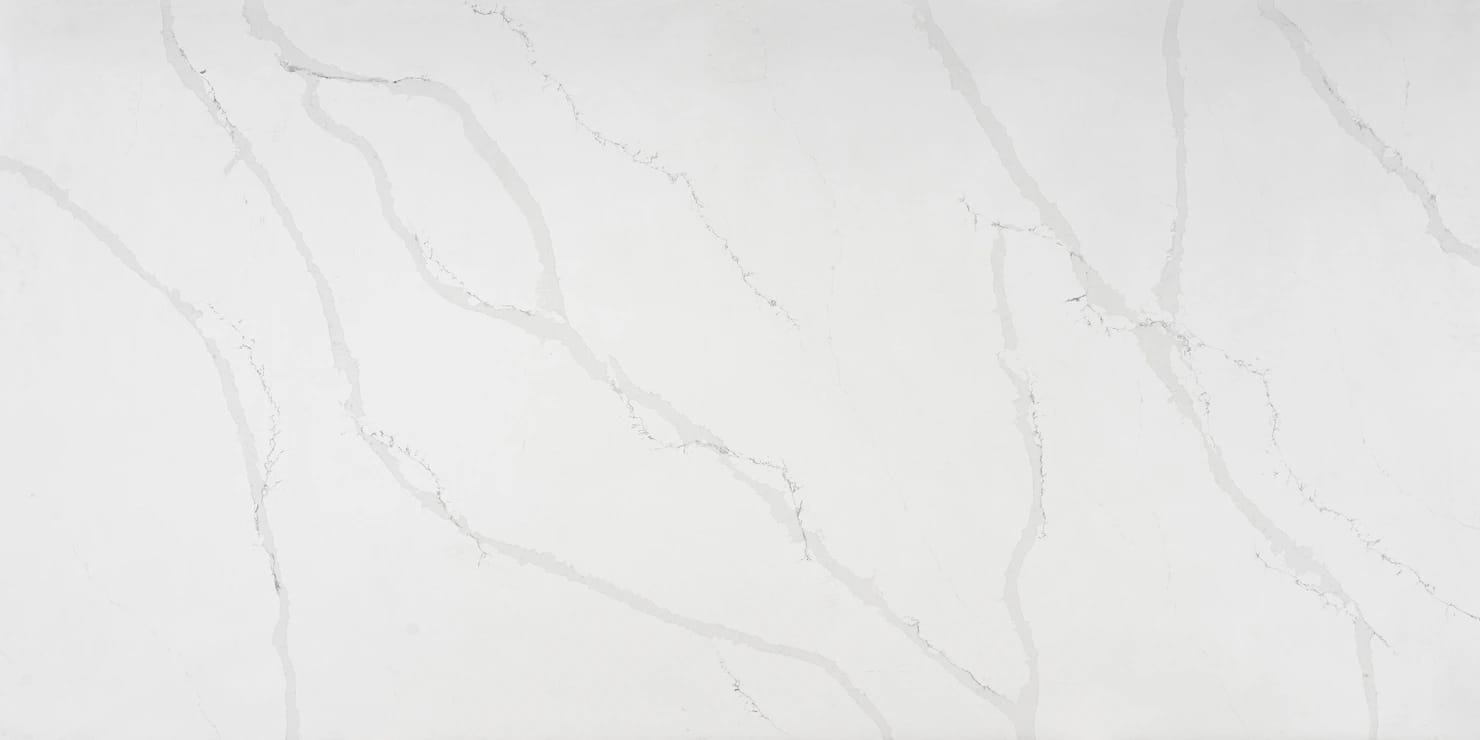
Quartz offers a wide selection of colours, from solid whites and greys to dramatic marble-inspired patterns. Its consistent design makes it easier to coordinate multiple worktops, islands, and vanity surfaces.
Granite offers naturally occurring patterns that cannot be reproduced exactly from slab to slab. From subtle neutral shades to bold mineral formations, it provides a distinctive appearance that works well in traditional, contemporary, and luxury interiors.
For architects and interior designers, the decision often depends on the project’s design language. Quartz suits coordinated, minimalist spaces, while granite is ideal for projects where natural variation is a central design feature.
3. Maintenance and Cleaning
Quartz is generally easier to maintain because its engineered surface is non-porous. Routine cleaning with a soft cloth, mild detergent, and water is usually sufficient. Abrasive cleaners and harsh chemicals should be avoided unless approved by the manufacturer.
Granite can also be maintained easily with regular cleaning. However, certain varieties may require sealing, depending on their porosity and the recommendations of the stone supplier. Spills should be cleaned promptly, particularly those involving oils, wine, or acidic substances.
If minimal maintenance is your priority, quartz may be the more convenient option. If you prefer natural stone, granite remains an excellent choice when you follow the appropriate care instructions.
4. Cost and Project Budget
The cost of quartz and granite varies according to slab quality, thickness, colour, finish, availability, fabrication, transportation, and installation.
Standard options for either material may be competitively priced, while premium engineered quartz designs and rare granite varieties can command higher prices. Custom edge profiles, cut-outs, complex installations, and wastage can also influence the final project budget.
When comparing quotations, consider the total installed cost rather than the price per slab alone. Request details about measurements, fabrication, delivery, installation, warranty, and maintenance requirements.
For large construction projects, working directly with a quartz manufacturer or an established granite supplier may help buyers explore bulk availability, consistent specifications, and project-specific pricing.
5. Best Applications for Quartz and Granite
Both materials can work well across a variety of interior applications, but the best choice depends on the environment and intended use.
Quartz is particularly suitable for
- Modern kitchen countertops and islands.
- Bathroom vanity tops.
- Hotel reception counters and office interiors.
- Residential developments requiring consistent surface designs.
- Projects where low-maintenance indoor surfaces are preferred.
Granite is particularly suitable for
- Kitchen worktops requiring good heat tolerance.
- Natural stone feature counters.
- Selected outdoor kitchens and exterior applications.
- Commercial spaces requiring durable natural surfaces.
- Projects where distinctive mineral patterns enhance the design.
Before specifying either material, confirm that the selected product is appropriate for the intended application, especially for outdoor installations, heavy-use commercial environments, and areas exposed to high temperatures.
Quartz vs Granite: Which Is Better?
The better material depends on your priorities, budget, and project requirements.
Choose quartz if you want a consistent design, a broad range of contemporary colours, low maintenance, and a surface that performs well in indoor environments.
Choose granite if you prefer natural stone, unique patterns, and generally better tolerance of brief heat exposure. Granite can also be an attractive option for suitable exterior applications, provided the specific variety and finish are appropriate for the local conditions.
For homeowners, the choice often comes down to aesthetics and everyday convenience. For architects, builders, and commercial buyers, availability, slab consistency, installation requirements, and long-term maintenance should also influence the decision.
Before making a purchase, compare samples or inspect full slabs, review technical specifications, and discuss the intended application with your supplier or manufacturer.
Conclusion
Quartz and granite are both excellent surface materials, but they serve different preferences and project needs. Quartz stands out for its design consistency, low maintenance, and suitability for contemporary interiors. Granite offers natural character, impressive durability, and generally better heat resistance.
The right choice depends on your design goals, environmental conditions, budget, and maintenance expectations. By comparing material specifications and working with a trusted quartz manufacturer or granite supplier, you can select a surface that balances appearance, performance, and long-term value.
Whether you are planning a residential kitchen, a luxury hospitality interior, or a large commercial development, choosing the right material from the beginning can help create a functional and visually appealing result.
Sources
- Caesarstone — care and maintenance (heat and sudden temperature changes)
- Caesarstone — quartz countertops for outdoor kitchens (UV exposure)
- Slabwise — engineered quartz countertops (what quartz is made of)
- Slabwise — do granite countertops need to be sealed?
- Geology.com — granite (formation and minerals)
Engineered Quartz and Granite on Surfular
Browse all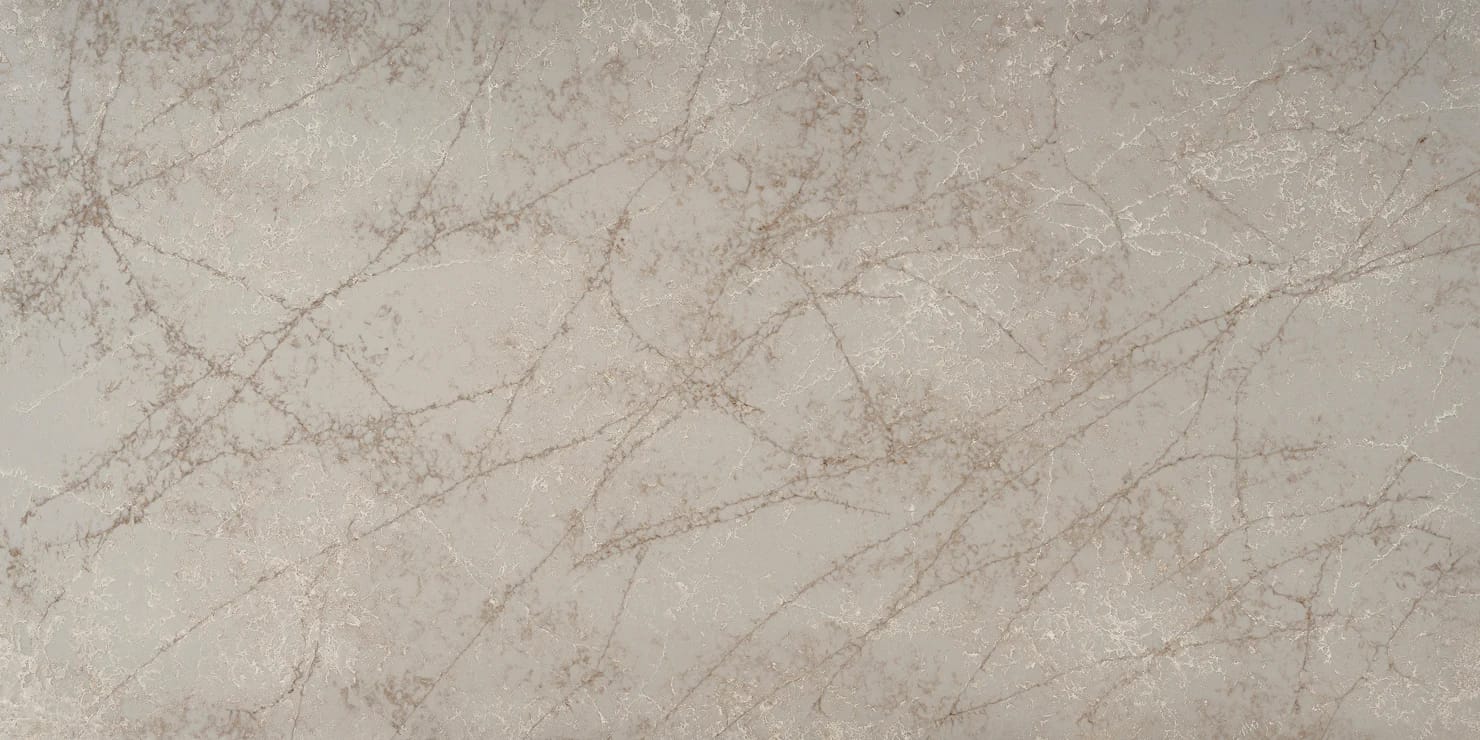
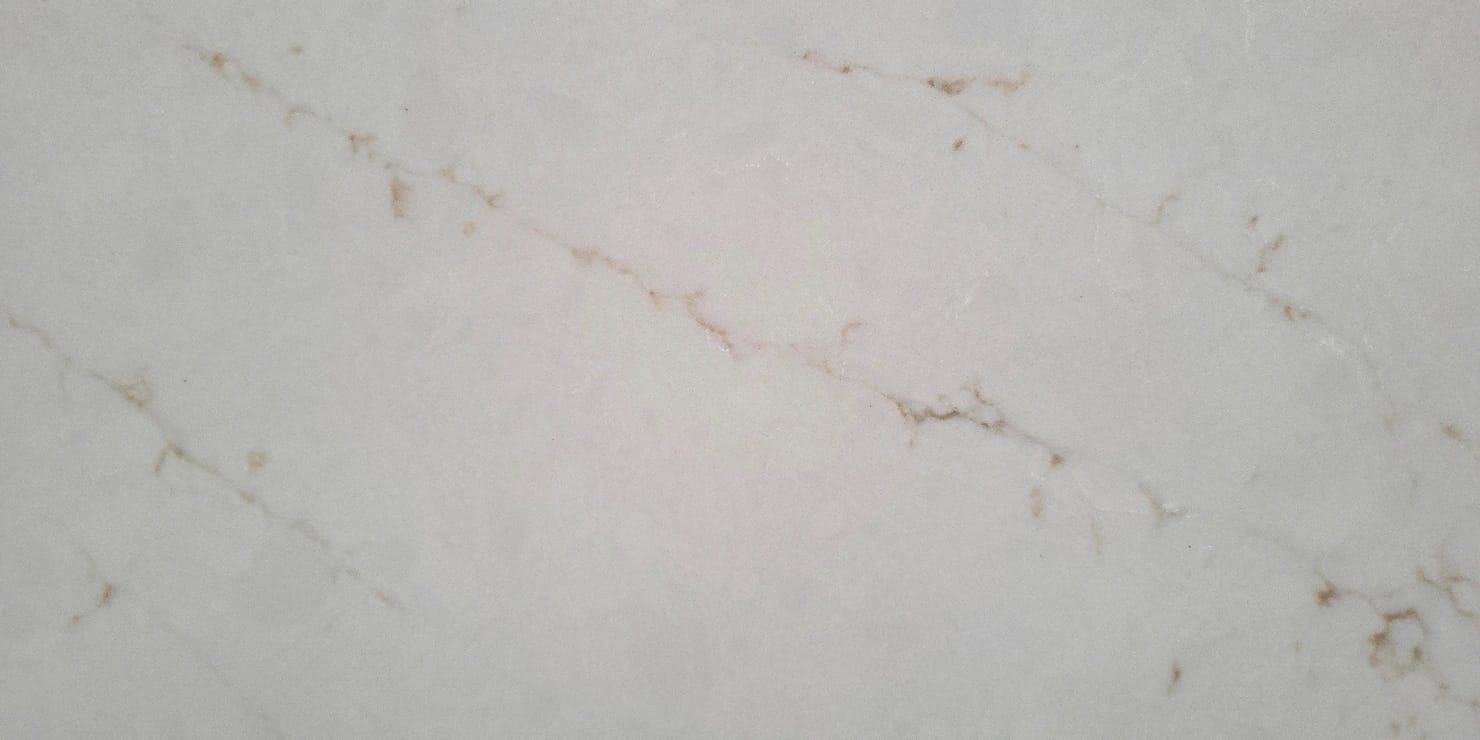
Source from verified suppliers
Tell us what you need once and get quotes from manufacturers and exporters on Surfular.