
Sourcing
How to Choose a Reliable Stone Supplier: Questions to Ask Before You Order
Learn how to choose a reliable stone supplier. Discover questions to ask about quality, pricing, certifications, delivery, and stone slab orders.
Surfular Editorial Team · Updated · 9 min read
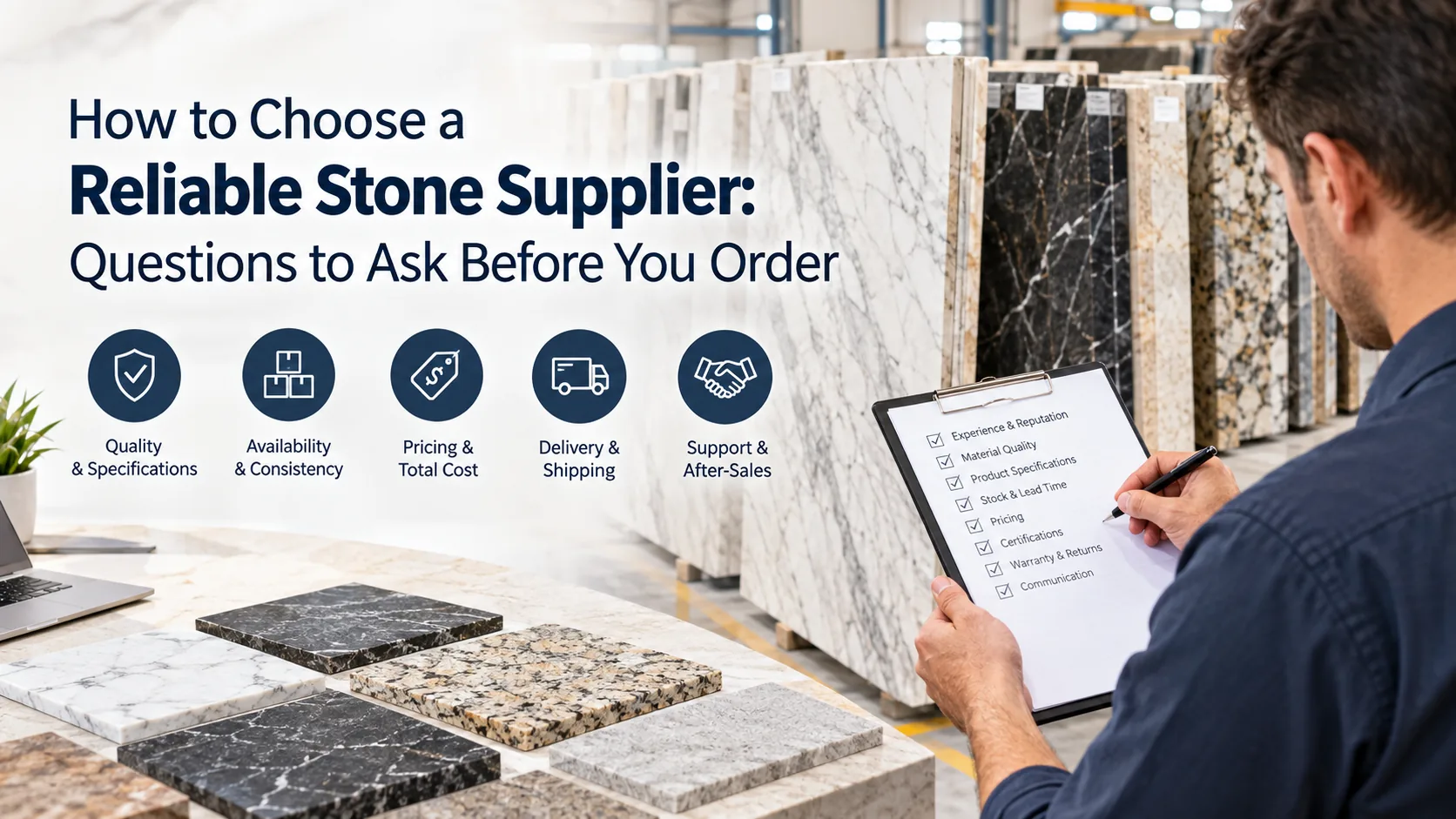
Choosing the right stone supplier is an important decision for homeowners, architects, interior designers, contractors, importers, and stone distributors. Whether you are purchasing natural marble, granite, or engineered quartz slabs, the quality of your supplier directly affects your project’s appearance, budget, delivery schedule, and long-term performance.
With so many stone suppliers in the market, identifying a reliable partner can be challenging. Product photographs may look impressive, but buyers also need to evaluate material quality, manufacturing standards, pricing transparency, inventory availability, and after-sales support.
For businesses sourcing materials in bulk, the decision becomes even more important. A dependable supplier can help maintain consistent quality, reduce supply chain disruptions, and build long-term business relationships.
In this guide, we explain how to choose a reliable stone supplier and the essential questions you should ask before placing an order.
1. Check the Supplier’s Experience and Reputation
The first step in choosing a reliable stone supplier is understanding their industry experience and reputation. An established supplier is generally better equipped to understand different material requirements, project specifications, and customer expectations.
Look for suppliers who specialise in the type of material you need, such as granite, marble, natural stone, or engineered quartz. If your project involves premium quartz surfaces, working directly with an experienced quartz manufacturer may provide better access to product specifications, manufacturing information, and available designs.
Before proceeding, ask these questions:
- How long have you been supplying stone materials?
- Which types of stone and surface materials do you specialise in?
- Can you share references from previous customers?
- Do you supply residential, commercial, or large-scale projects?
- Can you provide company details and a verifiable business address?
You can also review customer testimonials, business listings, trade references, and project portfolios. For international purchases, verify the supplier’s export experience and ability to handle documentation and shipping requirements.
2. Verify Material Quality and Product Specifications
Stone quality is one of the most important factors when selecting a supplier. Natural stone varies in colour, veining, mineral composition, and porosity, while engineered quartz products can differ in design consistency, technical performance, and manufacturing quality.
A professional stone supplier should clearly communicate the characteristics of each product and provide accurate specifications before you place an order.
Ask your supplier:
- What are the material’s thickness, dimensions, and finish?
- Are the slabs inspected for visible defects before dispatch?
- Can I review high-resolution images or videos of the actual slabs?
- What technical specifications or test reports are available?
- Are samples available before bulk ordering?
For engineered quartz, request relevant technical information regarding water absorption, stain resistance, surface hardness, and recommended applications. For natural stone, ask about porosity, suitable sealants, maintenance requirements, and any known limitations.
Never rely solely on catalogue photographs when appearance is critical. Whenever possible, inspect the actual slab or request recent photographs under appropriate lighting.
3. Ask About Product Availability and Consistency
Product availability is particularly important for contractors, distributors, importers, and developers working with fixed project deadlines.
A supplier may have an attractive product catalogue but limited stock of a particular colour, finish, or thickness. This can create delays when additional material is needed or multiple project phases require matching surfaces.
Before confirming your order, ask:
- Is the selected material currently available?
- How many slabs or square metres are in stock?
- Can you supply matching materials for future orders?
- Will the same design or batch remain available?
- What is the expected lead time for production or replenishment?
For large projects, request written confirmation of quantities, specifications, and dispatch timelines. If exact colour matching is essential, discuss batch variation and reserve sufficient material for the entire project where practical.
Working with an experienced stone supplier who understands inventory planning can help reduce delays and simplify project coordination.
4. Compare Pricing and Understand the Total Cost
Price is an important consideration, but the cheapest quotation does not always represent the best value.
Stone prices depend on the material type, grade, origin, thickness, finish, dimensions, processing requirements, transportation, and order quantity. Custom fabrication, packaging, insurance, taxes, and installation may add further costs.
Request a detailed quotation that includes:
- Price per slab, square metre, or other applicable unit.
- Material specifications and selected finish.
- Minimum order quantity, if applicable.
- Packaging and transportation charges.
- Taxes, duties, and other applicable fees.
- Payment terms and quotation validity.
- Costs associated with returns or damaged deliveries.
If you are comparing multiple suppliers, ensure that each quotation covers equivalent materials and specifications.
For B2B buyers, negotiating volume-based pricing and discussing repeat-order terms may improve purchasing efficiency. However, avoid making a decision based on price alone. Product quality, reliable delivery, communication, and after-sales support should also influence your choice.
5. Understand Delivery, Packaging, and Shipping
Stone slabs are heavy and can be damaged if they are handled, packed, or transported incorrectly. Therefore, delivery arrangements should be discussed before you confirm the order.
Ask the supplier:
- What is the expected production and delivery timeline?
- How are slabs packaged and secured for transportation?
- Is transportation insurance available?
- Who is responsible for unloading at the destination?
- What is the process for reporting damaged or missing material?
- Can you provide tracking details and shipping documents?
For international buyers, it is especially important to clarify shipping terms, customs documentation, port handling, insurance responsibilities, and the allocation of costs and risks.
If you are importing engineered quartz or natural stone in container quantities, confirm the loading plan, packaging standards, slab count, and documentation requirements in advance.
A reliable supplier should provide clear answers and communicate promptly if unexpected delays occur.
6. Review Quality Control and Certifications
A professional stone supplier should have a clear process for checking materials before dispatch. Quality control helps identify visible defects, dimensional inconsistencies, finish problems, and other issues that may affect installation.
Ask whether the supplier follows documented inspection procedures and whether relevant test reports or certifications are available for the specific product.
Useful questions include:
- What quality checks are performed before dispatch?
- Are thickness, dimensions, and finish inspected?
- Can you provide applicable test reports or product documentation?
- Are the products compliant with relevant project specifications?
- What happens if the delivered material does not meet the agreed requirements?
Requirements vary by application and destination market. For engineered quartz, buyers should also consider applicable workplace safety requirements for fabrication and cutting, including controls for respirable crystalline silica.
Do not assume that every supplier or product has the same certifications. Verify documents directly and confirm that they apply to the specific material being purchased.
7. Clarify Payment Terms, Warranty, and Returns
Payment terms and after-sales policies are essential when choosing a reliable stone supplier, especially for large orders or international transactions.
Before transferring money, confirm the supplier’s legal business details, payment instructions, contractual terms, and responsibilities. Be cautious about unexplained changes to bank account details or requests to send funds to unrelated parties.
Ask the supplier:
- What payment methods and milestones are available?
- Is a deposit required before production?
- What warranty, if any, applies to the product?
- What is the procedure for handling defects or transit damage?
- Are returns, replacements, or credits available?
- Who should I contact if a problem arises after delivery?
Get important commitments in writing. A clear purchase order or sales agreement should describe the product, quantity, specifications, price, delivery arrangements, inspection criteria, and remedies for non-conforming material.
Understanding these terms before ordering can help prevent disputes and protect your business interests.
8. Evaluate Communication and Long-Term Support
Good communication is often an overlooked factor when choosing a stone supplier. A supplier who responds promptly, provides accurate information, and communicates openly can make procurement much easier.
This is particularly important for architects, contractors, kitchen manufacturers, and distributors who may need updated specifications, additional quantities, samples, or assistance coordinating deliveries.
Evaluate whether the supplier:
- Responds clearly to technical and commercial questions.
- Provides accurate product photographs and documentation.
- Communicates stock availability and delivery updates.
- Offers practical guidance on material selection and care.
- Has a clear process for resolving customer complaints.
For businesses that regularly purchase stone, a dependable long-term partner can improve procurement planning and help maintain consistent service for your own customers.
9. Questions to Ask Before Ordering Stone: A Quick Checklist
Before placing an order, make sure you have answers to the following essential questions:
- Is the supplier experienced in the material I need?
- Have I verified the product specifications and quality?
- Have I reviewed actual slab images or physical samples?
- Is sufficient stock available for my project?
- Have I received a complete quotation?
- Are production and delivery dates confirmed?
- Are payment, warranty, and return terms documented?
- Have I verified relevant certifications and business details?
- Is the packaging and damage-reporting process clear?
- Do I have a written order confirmation?
Completing this checklist can help you compare suppliers objectively and make a more informed purchasing decision.
Conclusion
Choosing a reliable stone supplier involves much more than comparing prices or selecting an attractive design. Buyers should evaluate material quality, stock availability, technical documentation, delivery reliability, payment terms, and after-sales support before placing an order.
Whether you are sourcing granite for a residential kitchen, marble for a luxury interior, or engineered quartz for a commercial development, asking the right questions can reduce purchasing risks and improve project outcomes.
Take time to verify suppliers, inspect materials, compare complete quotations, and document important commitments. By building relationships with dependable stone suppliers and manufacturers, you can source suitable materials with greater confidence and support the long-term success of your projects.
Sources
Engineered Quartz and Granite on Surfular
Browse all

Source from verified suppliers
Tell us what you need once and get quotes from manufacturers and exporters on Surfular.