Materials
Calacatta vs Carrara vs Statuario: How to Tell Marble Types Apart
Learn how to tell Calacatta, Carrara, and Statuario marble apart. Compare colours, veining, price, applications, and marble alternatives for your project.
Surfular Editorial Team · Updated · 9 min read
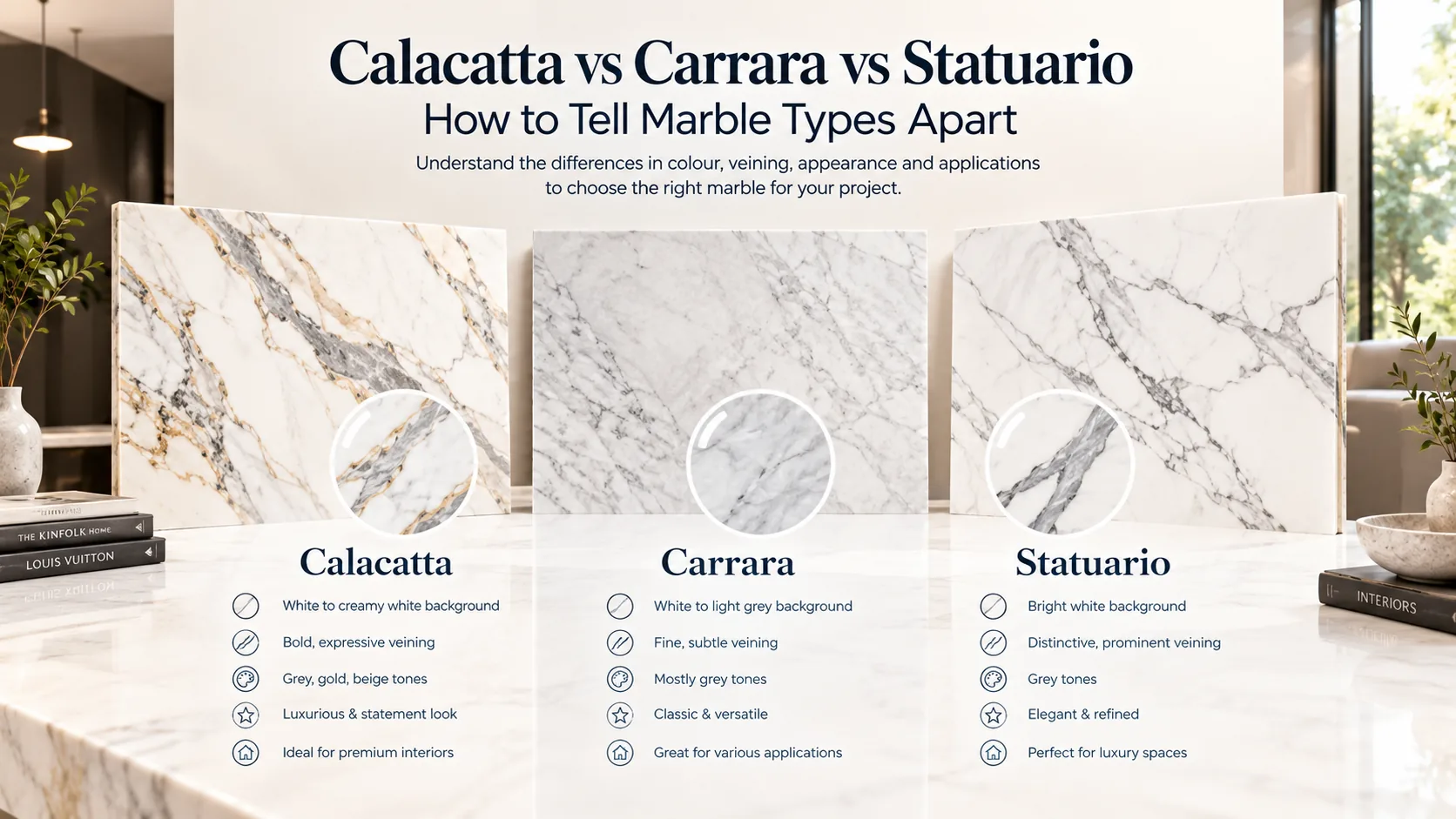
White marble has remained a favourite in luxury architecture and interior design for centuries. From elegant kitchen islands and bathroom vanities to hotel lobbies and statement walls, its natural veining and timeless appearance create a sophisticated atmosphere. However, not all white marble looks the same. Calacatta, Carrara, and Statuario are three well-known Italian marble varieties, each with distinctive patterns, backgrounds, and design characteristics.
Understanding the difference between Calacatta, Carrara, and Statuario marble can help homeowners, architects, interior designers, and stone distributors select the right material for their projects. While these marbles may appear similar at first glance, differences in veining, colour, availability, and price can significantly influence the final design.
In this guide, we compare Calacatta vs Carrara vs Statuario marble, explain how to identify each type, and explore their best applications in residential and commercial interiors.
What Is Calacatta Marble?
Calacatta marble is a premium natural stone traditionally associated with the Carrara region of Italy. It is recognised for its relatively bright white background and bold, expressive veining. Depending on the variety, the veins can range from soft grey to dramatic gold, beige, or warm brown.
Calacatta is commonly used in luxury kitchens, bathroom walls, vanity tops, feature walls, and high-end hospitality interiors. Its striking patterns make it a popular choice for spaces where the stone is intended to become a focal point.
Key Characteristics of Calacatta Marble
- Background: Typically white or creamy white.
- Veining: Bold, dramatic, and often widely spaced.
- Colour variations: Grey, gold, beige, and other warm tones, depending on the variety.
- Appearance: Luxurious and visually distinctive.
- Common applications: Kitchen islands, bathroom vanities, feature walls, and premium interiors.
Calacatta is often positioned as a luxury marble because of the desirability and relative scarcity of certain varieties. However, prices vary significantly by grade, quarry source, slab size, and market availability.
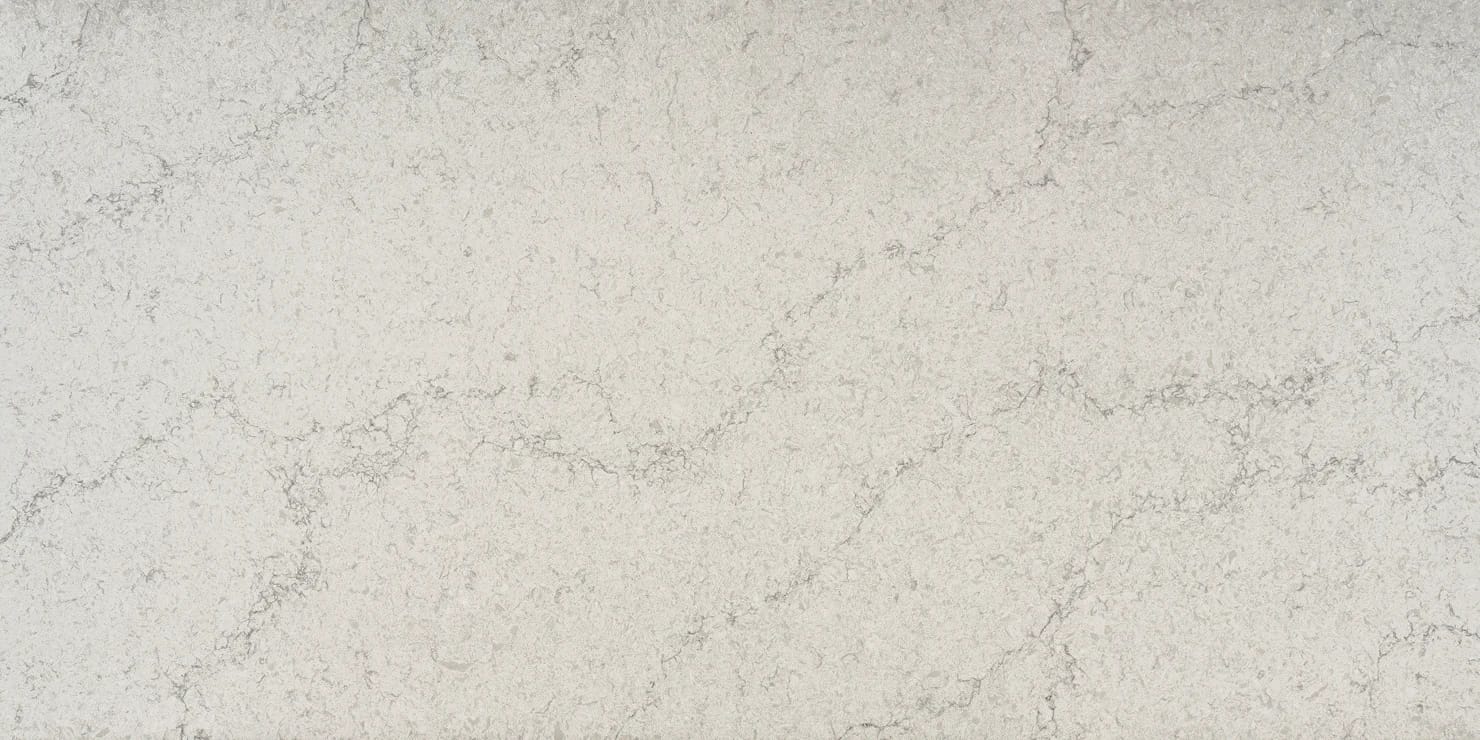
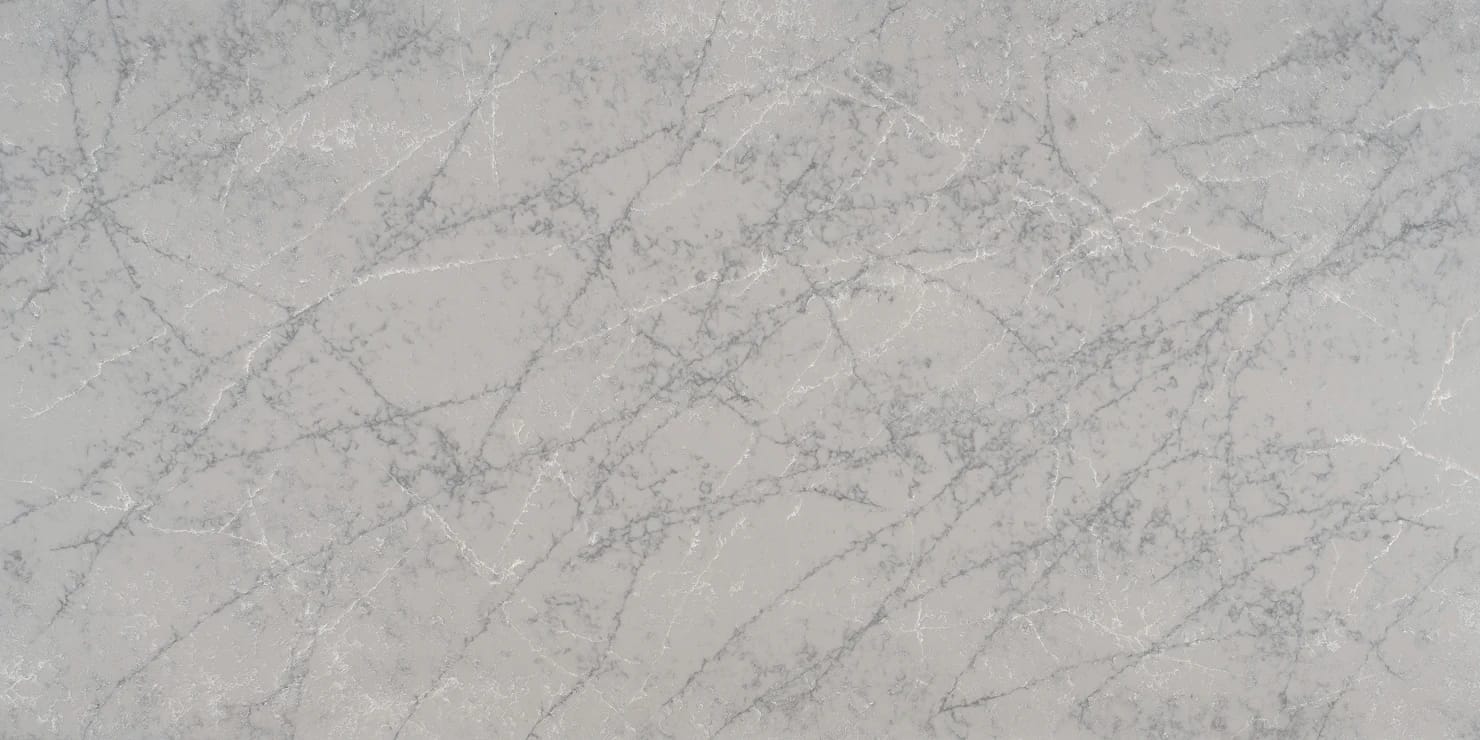
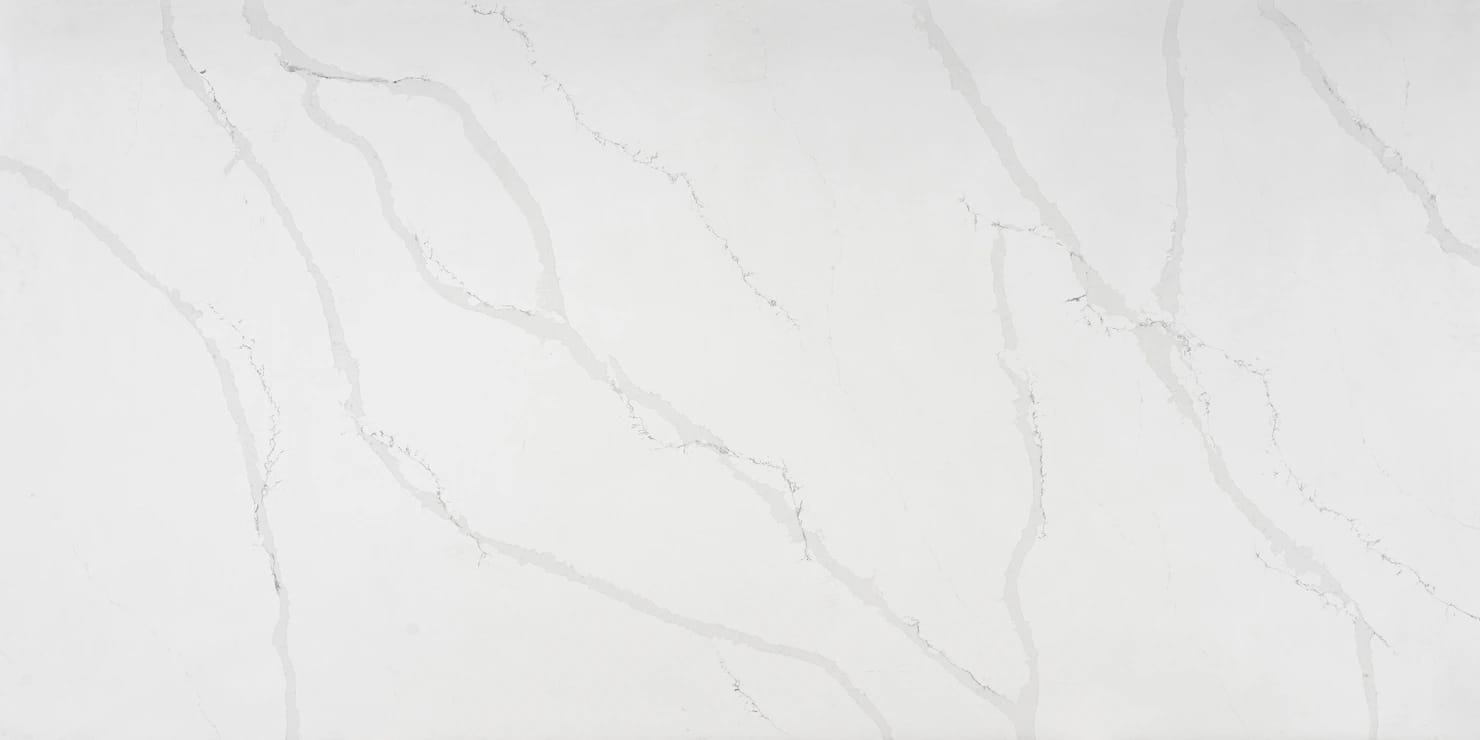
For buyers seeking a similar aesthetic with different performance characteristics, engineered quartz surfaces inspired by Calacatta marble offer another option. These designs can provide greater pattern consistency across multiple slabs, making them useful for projects requiring coordinated surfaces.
What Is Carrara Marble?
Carrara marble is one of the most widely recognised natural white marble varieties from Italy. Traditionally quarried in the Carrara area of Tuscany, it is known for its soft white to light grey background and delicate, feathery grey veining.
Compared with many Calacatta varieties, Carrara typically has a more understated appearance. Its subtle patterns make it suitable for interiors that require natural texture without overwhelming the surrounding design.
Key Characteristics of Carrara Marble
- Background: White, cool white, or light grey.
- Veining: Fine, soft, and relatively subtle.
- Colour variations: Usually grey veining against a pale background.
- Appearance: Classic, understated, and versatile.
- Common applications: Bathroom walls, flooring, kitchen backsplashes, vanity tops, and decorative surfaces.
Carrara marble works particularly well in Scandinavian, contemporary, traditional, and minimalist interiors. Its softer visual character allows it to complement wood, metal, neutral cabinetry, and other natural materials.
Carrara can also be more accessible in price than many sought-after Calacatta or Statuario varieties, although the actual cost depends on the specific material and supplier.
Because marble is a natural stone, Carrara requires appropriate care. It can be susceptible to staining and etching from acidic substances, so buyers should understand its sealing and maintenance requirements before selecting it for kitchen worktops.
What Is Statuario Marble?
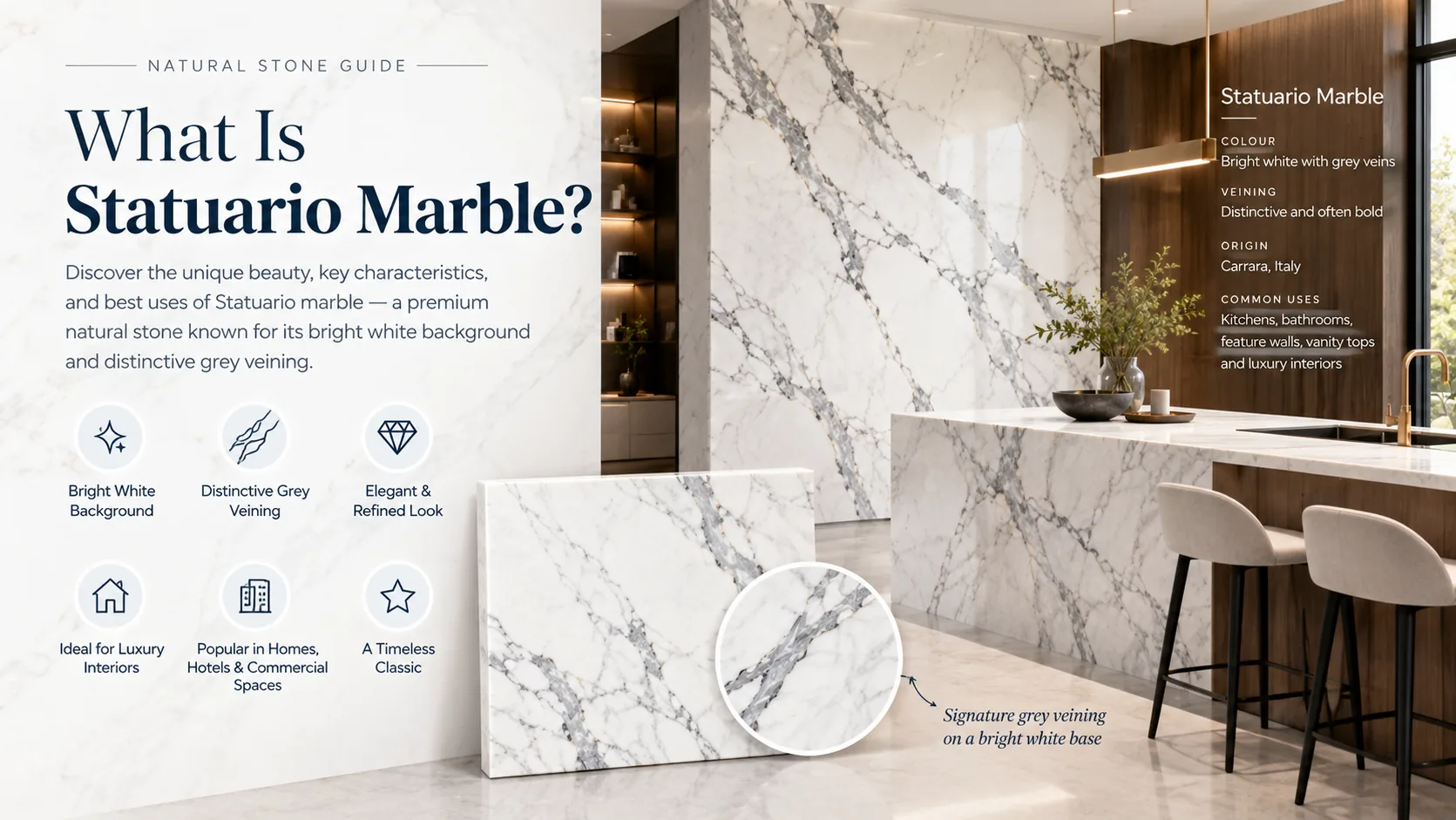
Statuario marble is another prestigious Italian marble traditionally associated with the Carrara region. It is valued for its bright white background and distinctive grey veining, which can be bold and dramatic without losing the stone's clean, elegant appearance.
Statuario has historically been used in sculpture and prestigious architectural projects. Today, it is also popular in luxury residential interiors, hotel bathrooms, feature walls, and statement countertops.
Key Characteristics of Statuario Marble
- Background: Typically bright white.
- Veining: Distinctive grey veins, often bold and well-defined.
- Appearance: Elegant, dramatic, and refined.
- Design appeal: Combines a bright background with strong natural patterns.
- Common applications: Luxury bathrooms, feature walls, premium vanity tops, and selected kitchen surfaces.
Statuario and Calacatta can look similar, especially in photographs. Both may feature a white background and prominent grey veining. Their appearance varies by block and commercial variety, so it is not always possible to identify them reliably from a small image alone.
Certain Statuario varieties command premium prices due to their appearance and availability. Buyers should verify the stone's provenance and commercial classification rather than relying exclusively on its trade name.
Calacatta vs Carrara vs Statuario: Key Differences
Although all three are associated with Italian white marble, they differ in their typical visual characteristics and design applications.
| Feature | Calacatta Marble | Carrara Marble | Statuario Marble |
|---|---|---|---|
| Background | White to creamy white | White to light grey | Typically bright white |
| Veining | Bold and expressive | Fine and soft | Distinctive and often bold |
| Typical vein colours | Grey, gold, beige | Primarily grey | Primarily grey |
| Overall appearance | Dramatic and luxurious | Subtle and classic | Bright and sophisticated |
| Common design use | Statement islands and feature walls | Flooring, bathrooms, and backsplashes | Luxury interiors and statement surfaces |
| Relative price | Often premium | Often more accessible | Often premium |
| Maintenance | Requires marble-appropriate care | Requires marble-appropriate care | Requires marble-appropriate care |
These are general characteristics rather than absolute rules. Natural variation means that individual slabs may differ considerably, even when sold under the same trade name.
How to Identify Calacatta, Carrara, and Statuario Marble
If you are comparing marble slabs for a project, look beyond the name on the catalogue. The following characteristics can help you distinguish the three varieties.
1. Examine the Background Colour
Carrara often has a softer white or light grey background, while Calacatta and Statuario are frequently associated with brighter white surfaces.
However, background colour can vary with the individual block, lighting, finish, and photography. Compare samples under similar lighting conditions for a more reliable assessment.
2. Study the Veining Pattern
Veining is one of the most useful visual clues.
Calacatta often features expressive, broad veins with dramatic movement. Carrara generally has finer, more delicate grey veining. Statuario frequently combines a bright white background with prominent grey veins.
These distinctions overlap, so veining alone cannot establish the exact commercial identity of every slab.
3. Look for Warm Colour Accents
Some Calacatta varieties feature gold, beige, or warm brown accents. These tones can create a warmer appearance than the predominantly grey veining often associated with Carrara and Statuario.
Not every Calacatta variety contains gold veining, so the absence of warm colours does not rule it out.
4. Inspect the Actual Slab
Photographs can make marble appear whiter, darker, or more dramatic than it looks in person. Lighting, camera settings, editing, and screen displays can all affect colour perception.
Before ordering, request recent photographs or videos of the actual slabs. For large projects, inspect the material in person whenever possible and review multiple slabs together.
5. Verify the Supplier's Documentation
If the precise marble variety matters to your project, ask the supplier for information about the quarry origin, commercial classification, and available supporting documentation.
A reputable marble supplier should explain the product's characteristics and disclose any uncertainty about its classification. This is particularly important when purchasing premium materials or importing slabs in bulk.
Which Marble Is Best for Your Project?
The right marble depends on your design objectives, budget, intended application, and maintenance expectations.
Choose Calacatta marble if:
- You want bold, statement-making veining.
- You are designing a luxury kitchen island or feature wall.
- Warm gold or beige accents complement your interior palette.
- You want a visually distinctive natural stone.
Choose Carrara marble if:
- You prefer subtle, understated patterns.
- Your design features neutral colours and natural materials.
- You need marble for flooring, bathroom walls, or backsplashes.
- You want a classic appearance that complements many interior styles.
Choose Statuario marble if:
- You prefer a bright white background with pronounced grey veining.
- You are creating an elegant, high-end interior.
- You want a refined natural stone for a statement surface.
- Your budget accommodates the specific variety you have selected.
Remember that all three are natural marbles and require appropriate installation, cleaning, and maintenance. Marble can etch when exposed to acids and may stain if spills penetrate the stone. A suitable sealer can reduce staining but does not make marble completely stain-proof or acid-resistant.
For applications where lower maintenance or consistent patterns are priorities, consider comparing natural marble with engineered quartz alternatives inspired by these designs.
Natural Marble vs Calacatta-Inspired Quartz
Natural marble and engineered quartz can deliver different benefits, even when their visual styles are similar.
Natural marble offers authentic geological variation, depth, and distinctive veining. However, it requires careful maintenance and may develop etching or stains during everyday use.
Engineered quartz is manufactured using quartz and other ingredients, including binders and pigments. Calacatta-inspired quartz designs can reproduce the broad veining and white backgrounds associated with premium marble while offering more consistent patterns and generally low-maintenance surfaces.
When comparing options, evaluate the manufacturer's technical specifications, recommended applications, heat limitations, and warranty. Standard resin-based engineered quartz is generally intended for indoor use and may discolour under prolonged UV exposure.
For architects, distributors, and project buyers, working with an experienced quartz manufacturer can help identify suitable designs, available slab sizes, finishes, and specifications. A specialised marble supplier can provide advice on natural variations, slab selection, and stone care.
Conclusion
Calacatta, Carrara, and Statuario marble each offer a distinctive interpretation of white natural stone. Calacatta is often chosen for its dramatic veining, Carrara for its subtle and timeless character, and Statuario for its bright background and refined grey patterns.
The best choice depends on the overall design, budget, material availability, and maintenance expectations. Rather than relying only on a product name or online photograph, inspect the actual slabs and verify their classification before ordering.
Whether you are an architect designing a luxury residence, an interior designer specifying premium surfaces, or a distributor sourcing marble for your customers, understanding these differences will help you make more informed material decisions. If you prefer a similar aesthetic with different maintenance characteristics, explore engineered quartz alternatives inspired by classic Italian marble designs.
Engineered Quartz on Surfular
Browse all
Source from verified suppliers
Tell us what you need once and get quotes from manufacturers and exporters on Surfular.
More articles
All articles MaterialsDifference Between Quartz vs Granite: Which Is Better for Worktops and Projects?Compare quartz vs granite for worktops and projects. Explore durability, cost, maintenance, design options, and tips for choosing a reliable supplier. · 8 min readRead
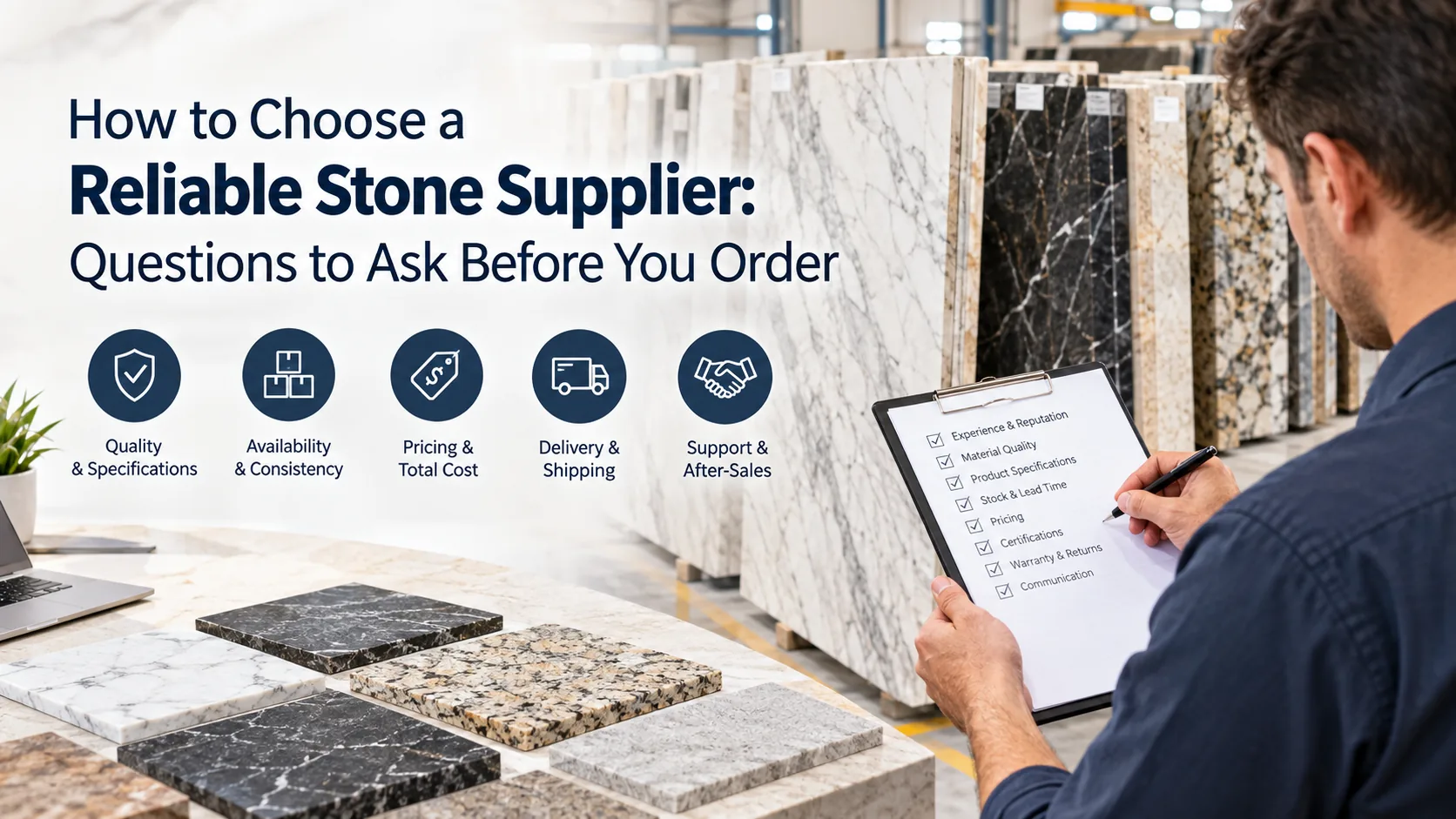 SourcingHow to Choose a Reliable Stone Supplier: Questions to Ask Before You Order